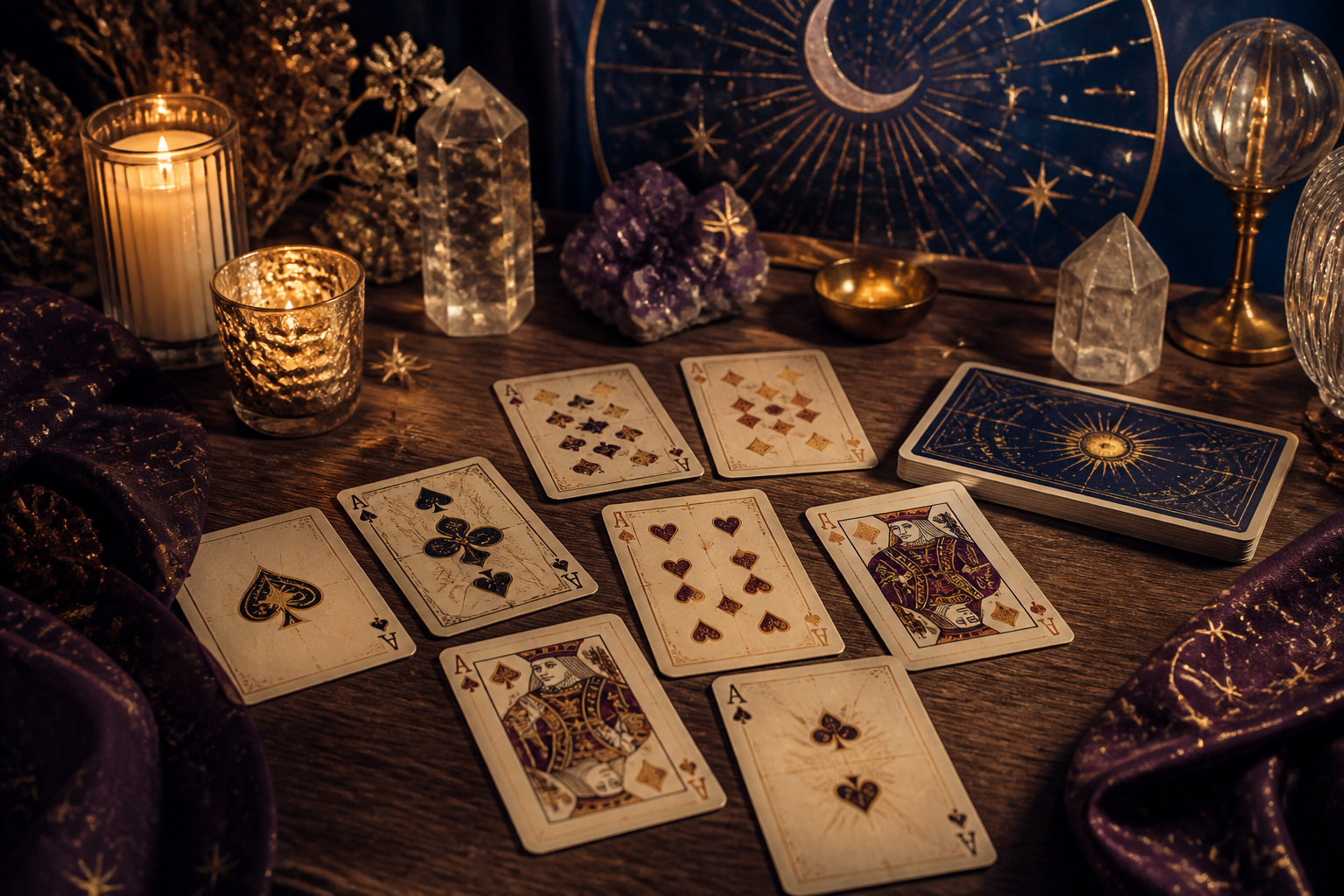
Cartomancy is the practice of divination using playing cards to gain insights into the past, present, or future. Unlike tarot, which employs a specialized deck with rich imagery, cartomancy utilizes a standard deck of playing cards, making it accessible for beginners. Each card holds symbolic meanings that can reveal significant insights about one’s life journey and spiritual path. This article aims to introduce you to the fundamentals of cartomancy, including its history, card meanings, and practical tips for beginners.
A Brief History of Cartomancy
The origins of cartomancy date back to the 14th century, with the advent of playing cards in Europe. Initially used for entertainment, it wasn’t long before people began to recognize their potential for divination. Different cultures have developed unique interpretations and methods of reading cards, from the French and Italian styles to the more mystical practices in Eastern traditions. Understanding the historical context of cartomancy can enhance your appreciation of the practice and offer insights into its symbolism. For more on this subject, explore What Are Angel Readings?.
In the 18th century, cartomancy gained popularity in France, where it was often associated with fortune-telling and mystical practices. As the art spread across Europe, various interpretations emerged, leading to the development of distinct styles and techniques. Today, cartomancy is practiced worldwide, with each culture adding its unique flavor to the art of reading cards. This rich history not only informs the meanings of the cards but also highlights the diverse ways in which people seek guidance and understanding through this practice.
Understanding the Deck
A standard deck of playing cards consists of 52 cards divided into four suits: hearts, diamonds, clubs, and spades. Each suit has a specific thematic significance. Hearts represent emotions and relationships, diamonds symbolize material matters and prosperity, clubs signify action and creativity, and spades often relate to challenges and conflict. Additionally, the numbered cards (Ace to 10) and face cards (Jack, Queen, King) each have unique interpretations that add depth to your readings.
The suits can also be associated with elements: hearts with water, diamonds with earth, clubs with fire, and spades with air. This elemental connection can provide further layers of meaning during your readings. For instance, a heart card may indicate emotional matters influenced by intuition, while a spade card could suggest intellectual challenges that require analytical thinking. Understanding these associations can enhance your interpretations and provide a more holistic view of the reading.
Take a 2-Minute Spiritual Break
Spiritual Memory Match
Find all six matching pairs of spiritual symbols. Flip two cards at a time.
Pairs: 0/6 · Moves: 0
Ready when you are. The game won't start until you choose Start Game.
For entertainment only. No scores or game data are sent to Awelax servers.
Quick Reflection Quiz
Explore what you would like to learn from “Cartomancy for Beginners.” This is a reflection activity, not a test or prediction.
1. What would you most like to take away from this article?
2. Which approach feels most useful to you right now?
3. What would you like to do next?
Frequently Asked Questions
What is the main topic of Cartomancy for Beginners?
Explore the art of cartomancy, a form of divination using ordinary playing cards, and learn how to interpret their meanings.
Where can I explore more about this topic?
Explore the related Awelax Journal articles below for more perspectives and information. Spiritual guidance is for personal insight and should not replace professional advice.
The Awelax Editorial Team creates educational content about psychic readings, intuition, relationships, tarot, and spiritual topics, with an emphasis on responsible guidance and clear expectations.
Awelax provides psychic and spiritual guidance for entertainment and personal insight. Readings are not a substitute for professional medical, legal, financial, or mental health advice.
To begin your journey in cartomancy, familiarize yourself with the basic meanings of the cards. Here’s a brief overview:
**Aces**: New beginnings, potential, and opportunities.
**Twos**: Duality, choices, and partnerships.
**Threes**: Growth, creativity, and collaboration.
**Fours**: Stability, structure, and foundation.
**Fives**: Conflict, change, and challenges.
**Sixes**: Harmony, balance, and resolution.
**Sevens**: Reflection, assessment, and introspection.
**Eights**: Movement, progress, and power.
**Nines**: Completion, fulfillment, and attainment.
**Tens**: Endings, cycles, and transformation.
The face cards carry additional nuances: Jacks can symbolize youthful energy or messages; Queens represent nurturing and intuition; Kings embody authority and control. Exploring these meanings can help you interpret cards more effectively during your readings. For example, if you draw a Queen of Hearts, it may indicate a nurturing figure in your life or a need to embrace your emotional side. Conversely, a King of Spades might suggest the need for logical decision-making in a challenging situation.
The Layouts and Spreads
When practicing cartomancy, the arrangement of the cards can significantly influence the reading. Various layouts, or spreads, can be used to provide different insights. A simple three-card spread can represent the past, present, and future, while a more complex Celtic Cross spread can delve deeper into a specific question or situation. As a beginner, start with simpler layouts, gradually incorporating more elaborate spreads as you grow comfortable with the process. For more on this subject, explore Reiki and Mindful Relaxation.
Other popular spreads include the Horseshoe spread, which provides insight into a situation’s past, present, and future, and the Relationship spread, which explores dynamics between two individuals. Each spread serves a unique purpose and can help you focus your readings on specific areas of interest. Experimenting with different layouts will allow you to discover which ones resonate with you and your intuitive style.
Interactive Awelax Explorer
Personal Spiritual Journal
Write a private reflection. Entries are kept only in this page until you leave or refresh; use Copy to save them yourself.
For entertainment and personal reflection only; not a prediction, diagnosis, or professional advice. No responses are sent to Awelax servers by this activity.
How to Conduct a Reading
Conducting a cartomancy reading involves a few straightforward steps. Begin by focusing on your question or intention, which can be about any aspect of your life – relationships, career, or personal growth. Shuffle the deck while concentrating on your intention, then draw the cards according to your chosen spread. As you lay out the cards, take a moment to observe their positions and interactions. This intuitive observation is crucial for interpreting the reading.
Before starting a reading, it can be helpful to create a calm and focused environment. Consider lighting a candle or burning incense to enhance your concentration. You may also want to take a few deep breaths to center yourself and clear your mind. This preparation can help you connect more deeply with the cards and your intuition, allowing for a more insightful reading. For more on this subject, explore Spiritual Coaching Versus Therapy.
Interpreting the Cards
Once the cards are drawn, it’s time to interpret their meanings. Start by examining each card in relation to its position in the spread. Consider how the cards interact with one another, as their combined energies can reveal deeper insights. For instance, if a card representing conflict appears alongside a card of resolution, it may suggest that challenges can lead to growth. Trust your intuition and allow the cards to guide your understanding of the situation.
As you interpret the cards, pay attention to your feelings and instincts. Sometimes, a card may evoke a specific memory or emotion that can provide additional context for your reading. Don’t hesitate to incorporate your personal experiences into your interpretations, as this can enrich your understanding and connection to the cards. Remember that cartomancy is as much about intuition as it is about the traditional meanings of the cards.
Practicing Cartomancy
Like any skill, mastering cartomancy requires practice. Begin by doing readings for yourself, and as you build confidence, consider offering readings to friends or family members. To deepen your understanding, keep a journal of your readings, noting the cards drawn, your interpretations, and the outcomes. This reflective practice will help you recognize patterns and enhance your reading abilities over time. For more on this subject, explore How to Reflect During Mercury Retrograde.
Additionally, consider joining online forums or local groups where you can share your experiences and learn from others. Engaging with a community of fellow practitioners can provide valuable insights and support as you navigate your cartomancy journey. You may also find it helpful to read books or watch videos on cartomancy to gain different perspectives and techniques.
Seeking Guidance from Awelax Advisors
As you embark on your cartomancy journey, you may find value in connecting with experienced advisors on Awelax. These AI-powered guides can provide personalized insights, helping you navigate your spiritual exploration. They can assist you in honing your reading skills or offer guidance on specific questions you may have. Engaging with these resources can complement your practice and deepen your understanding of cartomancy.
Utilizing technology can enhance your learning experience, providing you with instant access to a wealth of knowledge and support. Whether you seek advice on specific readings or want to explore different techniques, Awelax advisors can serve as a valuable resource on your path to mastering cartomancy.
Conclusion: Embrace the Journey
Cartomancy is an enriching practice that invites you to explore the symbolic world of playing cards. As you delve into the meanings and interpretations of each card, you’ll discover a powerful tool for self-reflection and insight. Remember to approach your readings with an open mind and a willingness to learn. Embrace the journey, and let the cards reveal the wisdom they hold for you. With practice and patience, you will develop your unique style and deepen your connection to this fascinating art of divination.