How to Interpret Tarot Cards in Love Readings
Learn how tarot symbolism, card positions, and context can shape thoughtful love readings without forcing fixed outcomes.
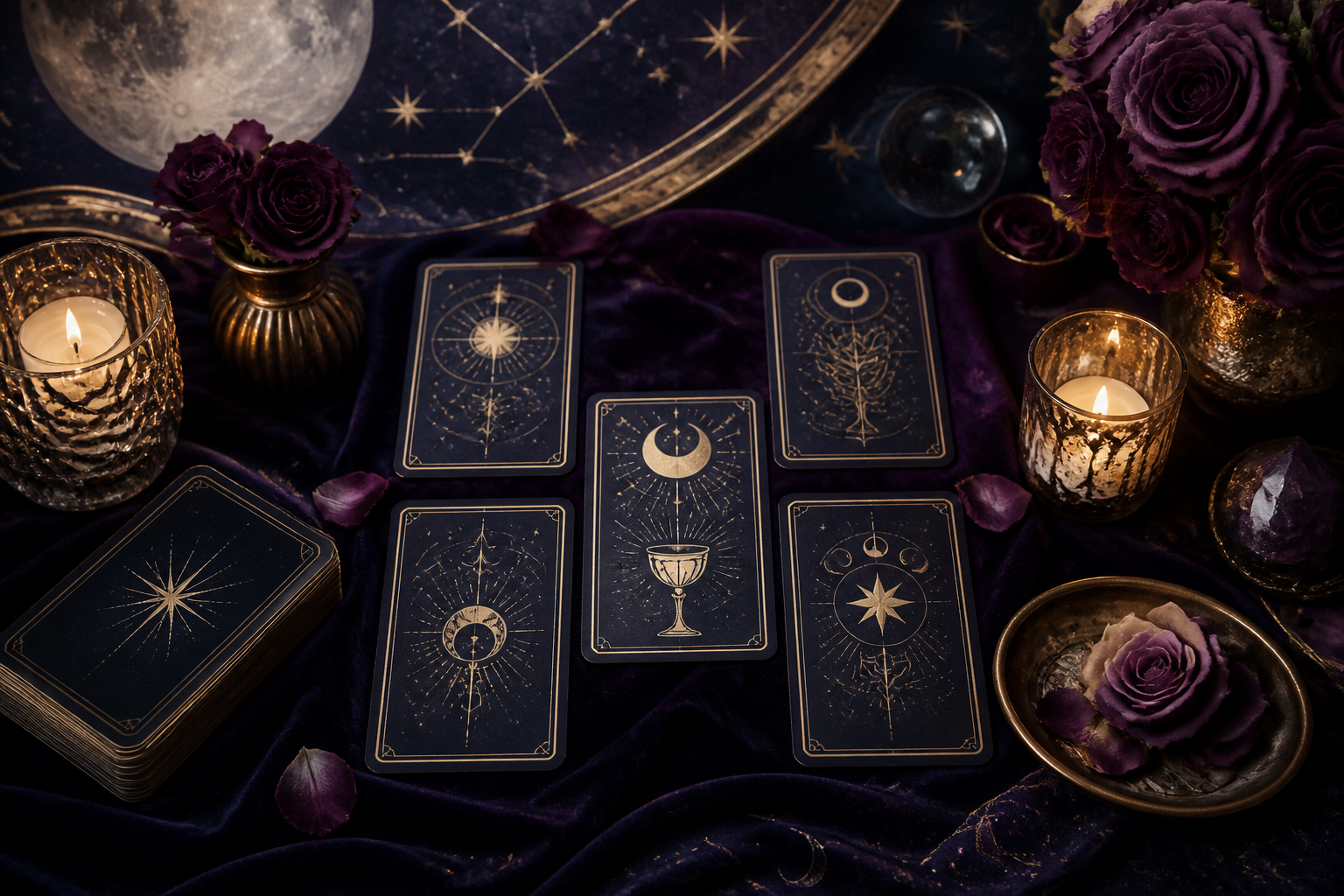
What does tarot offer in a love reading?
In tarot, a love reading is usually best treated as an interpretive conversation about themes, patterns, and choices rather than a fixed forecast. The cards do not need to “cause” an outcome to be useful. In Western tarot practice, they are often read as symbols that can bring attention to emotions, timing, hesitation, desire, and the way two people are behaving in the connection.
That is why context matters so much. In one spread, the Two of Cups may be interpreted as mutual interest or emotional reciprocity. In another, it may suggest the wish for balance before that balance is fully present. Both readings can be plausible, especially if the rest of the spread points in different directions.
A helpful question is: what aspect of the relationship story is this card highlighting right now? That keeps the reading grounded in reflection rather than certainty, and it leaves room for individual differences, mixed motives, or simply incomplete information.
How should you read symbols on a card?
Tarot symbolism is layered: images, numbers, suits, and figures all contribute to meaning. In many tarot traditions, cups are often associated with feeling and relational exchange, wands with desire, momentum, or initiative, swords with communication or conflict, and pentacles with practical concerns such as stability and shared responsibilities.
The artwork matters too. A card showing two people facing each other may suggest reciprocity, but it can also raise questions about mirroring, dependence, or compromise. A crown, chain, rose, or storm cloud can add nuance without forcing one interpretation. For example, a rose may signal tenderness in one reading and idealization in another.
A simple way to keep the symbolism grounded is to consider three layers together: the card’s traditional meaning, the emotional tone of the image, and the exact relationship question being asked. Read that combination rather than any single sign in isolation.
Why does card position change the meaning?
In many spreads, position tells you what role a card is playing. A card in the “current energy” position may describe the mood of the connection, while the same card in a “challenge” position can point to the obstacle that is blocking closeness. In Western tarot reading, position is usually treated as context, not as a rule that erases the card’s core symbolism.
Imagine a three-card spread with positions for you, the other person, and the relationship between you. If The High Priestess appears in the first position, it might suggest private feelings, guardedness, or quiet intuition. In the other person’s position, it could describe someone difficult to read. In the relationship position, it may point to a bond that is still unfolding or not fully spoken.
Positioning also helps prevent overreaction. A difficult card in a future position is not automatically a promise of trouble. It may simply suggest that careful communication will matter if the current pattern continues.
What does a worked example look like?
Consider a simple three-card spread: past, present, and advice.
- Past: The Lovers
- Present: Seven of Cups
- Advice: Temperance
In a tarot-based love reading, The Lovers in the past may suggest a meaningful choice, strong attraction, or a relationship shaped by shared values. The Seven of Cups in the present could point to many possibilities, mixed signals, fantasy, or difficulty choosing a clear direction. Temperance as advice does not have to mean “wait indefinitely.” More often, it suggests balance, patience, measured pacing, and blending emotion with realism.
A different reader might emphasize that The Lovers does not automatically mean a perfect romance; it can also indicate a pivotal decision. The Seven of Cups might describe someone sorting through options, or simply a stage where the future is still open. This kind of spread works best when you read feeling and structure together rather than forcing a single romantic script.
How do you avoid projecting what you want to hear?
Love readings become more useful when they stay honest about uncertainty. It is easy to notice the card you hope for and ignore the rest of the spread. To reduce projection, compare the card’s traditional meaning with the question you actually asked. If the reading is about an existing relationship, focus on interaction and pattern. If it is about a potential partner, the cards may reflect readiness, compatibility, or timing rather than destiny.
A practical deliverable is a two-column note titled “What I want to hear” and “What the cards may actually be saying.” Under the second column, list at least two alternative interpretations for one card. For instance, the Moon can suggest confusion, hidden feelings, or simply incomplete information. That small exercise keeps the reading open-minded without making it vague.
A careful love reading should leave room for choice, not remove it.
When do common love-card stereotypes break down?
Stereotypes can make readings feel tidy, but they can also mislead. In many traditions, the Knight of Cups is linked with romance or pursuit, yet not every appearance means a sincere admirer is arriving. It may instead describe someone idealistic, emotionally expressive, or prone to big promises. Likewise, the Devil is not automatically a sign of “bad love”; it can point to attachment, obsession, temptation, or intense chemistry that needs boundaries.
A contrasting example helps here. The Queen of Pentacles is often treated as warm and nurturing, but in a love reading she might represent someone who is over-responsible, highly practical, or focused on security more than spontaneity. That does not fit the usual stereotype, yet it can be the more accurate interpretation.
If you want broader interpretive support, an experienced tarot advisor can help you test whether a card is describing mood, habit, or actual relationship dynamics. The key is to fit the symbol to the situation, not the situation to a preset script.
How can tarot inform real relationship decisions?
Tarot can support relationship reflection when it is used for clarity rather than as a substitute for conversation. If a spread points to mixed signals, the next step may be to ask direct questions, slow the pace, or notice whether actions match words. If it highlights imbalance, the cards can prompt a boundary check: What am I giving? What am I receiving? What needs to change?
In practice, many readers weigh personal context more heavily than any single card. A loving spread cannot confirm commitment, honesty, or compatibility on its own. It can, however, help you name emotional patterns you may already sense but have not clearly articulated. For example, a spread around a long-distance relationship might show patience and distance as separate themes, which can lead to a practical conversation about visits, communication, or expectations.
Used this way, tarot can support reflection without replacing real-world responsibility.
Conclusion
Interpreting tarot cards in love readings is less about memorizing fixed meanings and more about reading symbol, position, and context together. In Western tarot tradition, the cards can be understood as offering clues about attraction, communication, readiness, and balance, while still leaving room for uncertainty. Strong readings avoid stereotypes, acknowledge alternative meanings, and respect real-world choices. When used thoughtfully, tarot can help you understand a relationship story with more honesty, nuance, and less guesswork.
About the Author
Awelax Editorial Team
The Awelax Editorial Team creates educational content about psychic readings, intuition, relationships, tarot, and spiritual topics, with an emphasis on responsible guidance and clear expectations.
Learn about our editorial process →Need Personal Guidance?
Your situation is personal. Your reading can be too.
Connect with a live Awelax psychic advisor for private guidance about love, relationships, career, spirituality, and life's important questions.
Find a PsychicAwelax provides psychic and spiritual guidance for entertainment and personal insight. Readings are not a substitute for professional medical, legal, financial, or mental health advice.