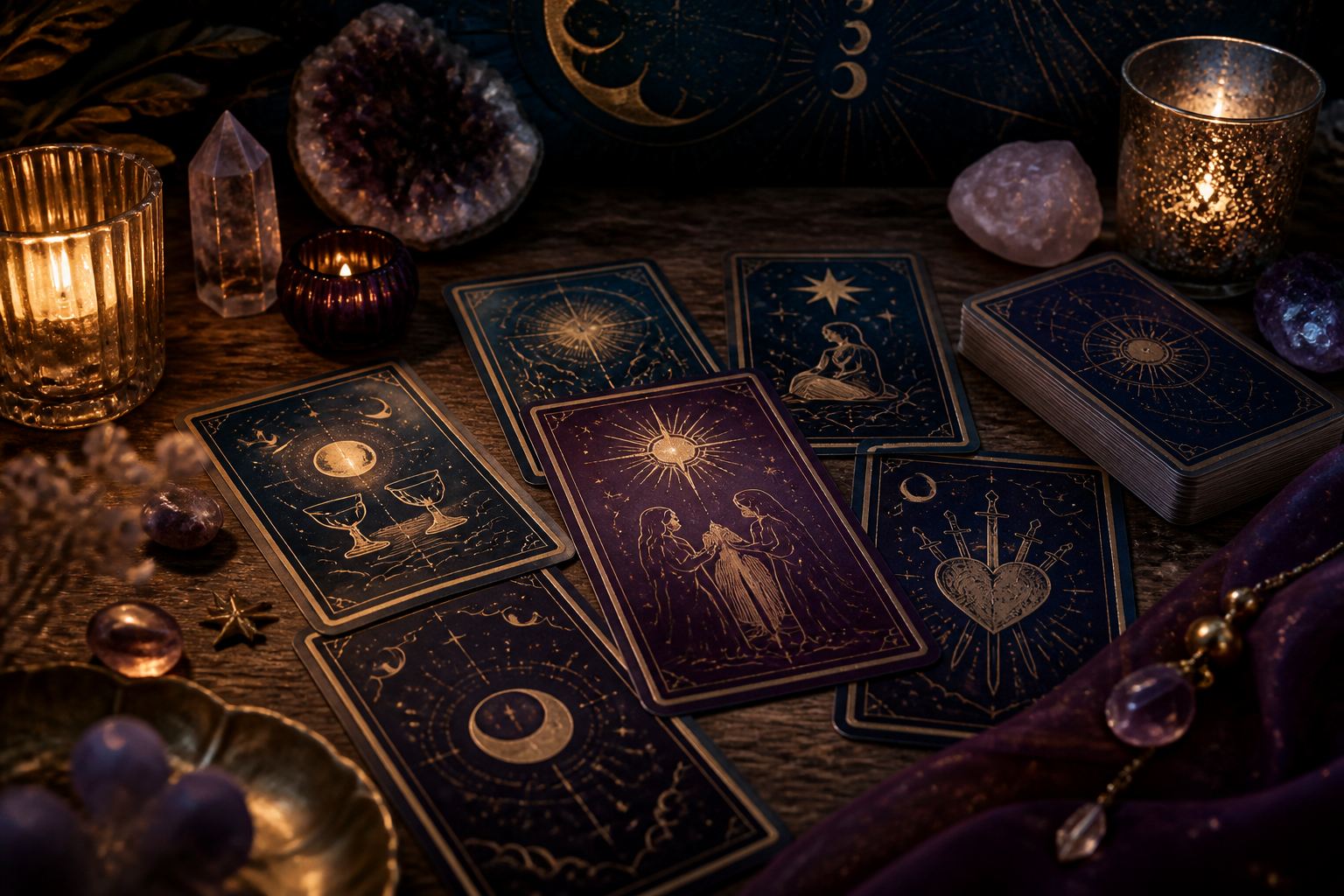
# How to Use Tarot to Explore Your Relationship Patterns
Introduction
Tarot cards have long been regarded as tools for reflection and guidance, providing insights into various aspects of our lives, including relationships. Whether you are navigating the complexities of romantic entanglements, familial ties, or friendships, Tarot can serve as a mirror, reflecting the patterns that you may not consciously recognize. By exploring these patterns, you can gain a deeper understanding of your emotional dynamics and facilitate personal growth. This article will guide you on how to utilize Tarot cards effectively to explore your relationship patterns.
Understanding the Basics of Tarot
Before diving into specific relationship readings, it’s essential to have a basic understanding of Tarot. A standard Tarot deck consists of 78 cards divided into the Major Arcana and the Minor Arcana. The Major Arcana represents significant life events and spiritual lessons, while the Minor Arcana focuses on day-to-day situations and emotions. Each card has its own symbolism and meaning, which can provide insights into various areas of life, including relationships. Familiarizing yourself with the cards will enhance your ability to interpret their messages effectively. For more on this subject, explore How to Use Tarot for Personal Empowerment: A Step-by-Step Guide.
For example, the **Lovers** card in the Major Arcana often symbolizes deep connections, choices in love, and harmony in relationships. On the other hand, the **Three of Swords** from the Minor Arcana may represent heartbreak or emotional pain. Understanding these nuances will help you gain more profound insights during your readings.
Setting Your Intention
When using Tarot to explore relationship patterns, setting a clear intention is crucial. This intention will serve as your guiding light throughout the reading. Ask yourself what you hope to understand or uncover about your relationships. For example, you might want to explore why you tend to attract certain types of partners or why specific conflicts keep arising in your interactions. Write down your intention, as this will help you remain focused during your reading.
A well-defined intention could be, "I want to understand the underlying reasons for my recurring relationship conflicts," which will guide your interpretation of the cards and keep your focus sharp.
Take a 2-Minute Spiritual Break
Spiritual Memory Match
Find all six matching pairs of tarot symbols. Flip two cards at a time.
Pairs: 0/6 · Moves: 0
Ready when you are. The game won't start until you choose Start Game.
For entertainment only. No scores or game data are sent to Awelax servers.
Quick Reflection Quiz
Explore what you would like to learn from “How to Use Tarot to Explore Your Relationship Patterns.” This is a reflection activity, not a test or prediction.
1. What would you most like to take away from this article?
2. Which approach feels most useful to you right now?
3. What would you like to do next?
Frequently Asked Questions
What is the main topic of How to Use Tarot to Explore Your Relationship Patterns?
Discover how Tarot cards can help you uncover and understand recurring themes in your relationships, fostering personal growth and emotional insight.
Where can I explore more about this topic?
Explore the related Awelax Journal articles below for more perspectives and information. Spiritual guidance is for personal insight and should not replace professional advice.
The Awelax Editorial Team creates educational content about psychic readings, intuition, relationships, tarot, and spiritual topics, with an emphasis on responsible guidance and clear expectations.
Awelax provides psychic and spiritual guidance for entertainment and personal insight. Readings are not a substitute for professional medical, legal, financial, or mental health advice.
Selecting an appropriate Tarot spread is essential for deriving meaningful insights. For exploring relationship patterns, consider using the following spreads:
**The Relationship Spread**: This spread typically involves three to five cards representing each partner’s feelings, the relationship’s strengths, and areas needing improvement. For instance, the first card could represent your feelings, the second your partner's, the third the relationship's strengths, and the fourth the challenges.
**The Past, Present, Future Spread**: This three-card spread can provide insights into how past experiences influence your current relationships and what the future may hold. The first card might reflect a past relationship experience, the second your current emotional state, and the third potential future outcomes.
**The Pattern Recognition Spread**: This spread can help you identify recurring themes across multiple relationships. You could position cards in a way that represents different relationships, focusing on what lessons each taught you. For example, you could lay out cards representing your last three significant relationships and analyze the patterns that emerge from them.
Try an interactive tool
Interactive Tarot Reflection
Draw a reflective tarot card for a new perspective.
For entertainment and personal reflection only. Not a prediction or substitute for professional advice. Your answers stay in this browser session.
Interpreting the Cards
Once you’ve selected your spread and laid out your cards, it’s time to interpret their meanings. Start by examining the individual cards and considering their traditional meanings, but also allow your intuition to guide you. Ask yourself:
What emotions do these cards evoke?
Do you see any familiar patterns in the cards drawn?
How do the cards relate to your intention?
For example, if you draw the **Two of Cups**, it may indicate a strong emotional bond, but if paired with the **Seven of Swords**, it could suggest issues of trust. Pay attention to how the cards interact with one another, as their combined meanings can offer deeper insights into your relationship dynamics. This interplay can reveal how different aspects of your relationships are interconnected.
Recognizing Recurring Themes
Interactive Awelax Explorer
Three-Card Tarot Reading
Draw three symbolic cards for Past, Present, and Future reflection.
For entertainment and personal reflection only; not a prediction, diagnosis, or professional advice. No responses are sent to Awelax servers by this activity.
As you analyze the cards, look for recurring themes or symbols that may indicate patterns in your relationships. Common themes may include: For more on this subject, explore How to Use Tarot to Gain Clarity on Your Career Path.
**Trust Issues**: If cards like the **Seven of Swords** or **Five of Cups** appear frequently, it may suggest a pattern of betrayal or disappointment. For instance, if you repeatedly draw cards that symbolize loss or deception, it might indicate a need to address trust issues in your relationships.
**Commitment Phobia**: Cards such as **The Fool** or **The Tower** might indicate a tendency to avoid serious commitments. If these cards appear in your readings, consider reflecting on your fears surrounding commitment and how they may be affecting your relationship choices.
**Healing and Growth**: Cards like **The Empress** or **The Star** can symbolize nurturing and healing, suggesting a pattern of personal growth in relationships. If you notice these cards frequently, it may indicate that you are on a path of self-discovery and emotional healing.
By documenting these themes, you’ll gain a clearer understanding of the emotional dynamics at play and how they influence your experiences. Keeping a Tarot journal can be particularly helpful for tracking these insights over time.
Interactive Awelax Explorer
Love Language Explorer
Which expression of care resonates most with you today?
For entertainment and personal reflection only; not a prediction, diagnosis, or professional advice. No responses are sent to Awelax servers by this activity.
Using Tarot for Personal Growth
Once you’ve identified your relationship patterns, think about how you can use this knowledge for personal growth. Tarot can guide you in setting intentions to break negative cycles or enhance positive habits. For instance, if you realize that you often attract partners who are emotionally unavailable, you might set an intention to focus on self-love and attracting healthier relationships.
Explore further
Pick a Card
Choose a card for a thoughtful reflection. This is a symbolic activity, not a prediction.
For entertainment and personal reflection. No account required; selections are not submitted to a server.
Consider pulling a card daily as a reminder of your intentions, allowing you to reflect on your progress and any shifts in your emotional landscape. For example, if you draw the **Strength** card, it may remind you to cultivate inner strength and resilience in your relationships. For more on this subject, explore How to Choose the Right Tarot Spread for Your Current Life Situation.
Additionally, you can create affirmations based on your readings. If you identify a pattern of self-sabotage, an affirmation like, "I deserve healthy and fulfilling relationships," can help reinforce your commitment to change.
Interactive Awelax Explorer
Personal Spiritual Journal
Write a private reflection. Entries are kept only in this page until you leave or refresh; use Copy to save them yourself.
For entertainment and personal reflection only; not a prediction, diagnosis, or professional advice. No responses are sent to Awelax servers by this activity.
Seeking Guidance from Tarot Advisors
If you find yourself feeling overwhelmed or uncertain while working with Tarot, consider connecting with a professional Tarot advisor through platforms like Awelax. Experienced advisors can provide additional insights, helping you delve deeper into your readings and offering a fresh perspective on your relationship patterns. They can also assist you in interpreting complex cards and advise you on how to navigate your path forward.
A professional reading can offer clarity and help you see your situation from a different angle, which can be particularly beneficial if you are stuck in a cycle of negative patterns. For more on this subject, explore How to Use Tarot for Clarity in Major Life Decisions.
Reflecting on Your Journey
After completing your Tarot readings and personal reflections, take the time to journal about your experiences. Write down your insights, feelings, and any changes you wish to implement in your relationships. This reflection process is vital as it reinforces your commitment to personal growth and helps you track your progress over time. Consider revisiting your notes periodically to evaluate how your understanding of your relationship patterns evolves.
Creating a dedicated section in your journal for relationship insights can also help you visualize your growth over time. You might include sections for what you’ve learned, what you wish to change, and how you plan to implement those changes.
Conclusion
Using Tarot to explore your relationship patterns can be a transformative experience, offering profound insights into your emotional dynamics and personal growth. By setting clear intentions, choosing appropriate spreads, and interpreting the cards thoughtfully, you can uncover recurring themes that shape your interactions. Remember that Tarot is a tool for self-discovery, and the insights gained should empower you to make informed choices in your relationships. Whether you seek guidance from the cards or the wisdom of an experienced advisor, the journey toward understanding your relationship patterns begins with an open heart and a willingness to learn.