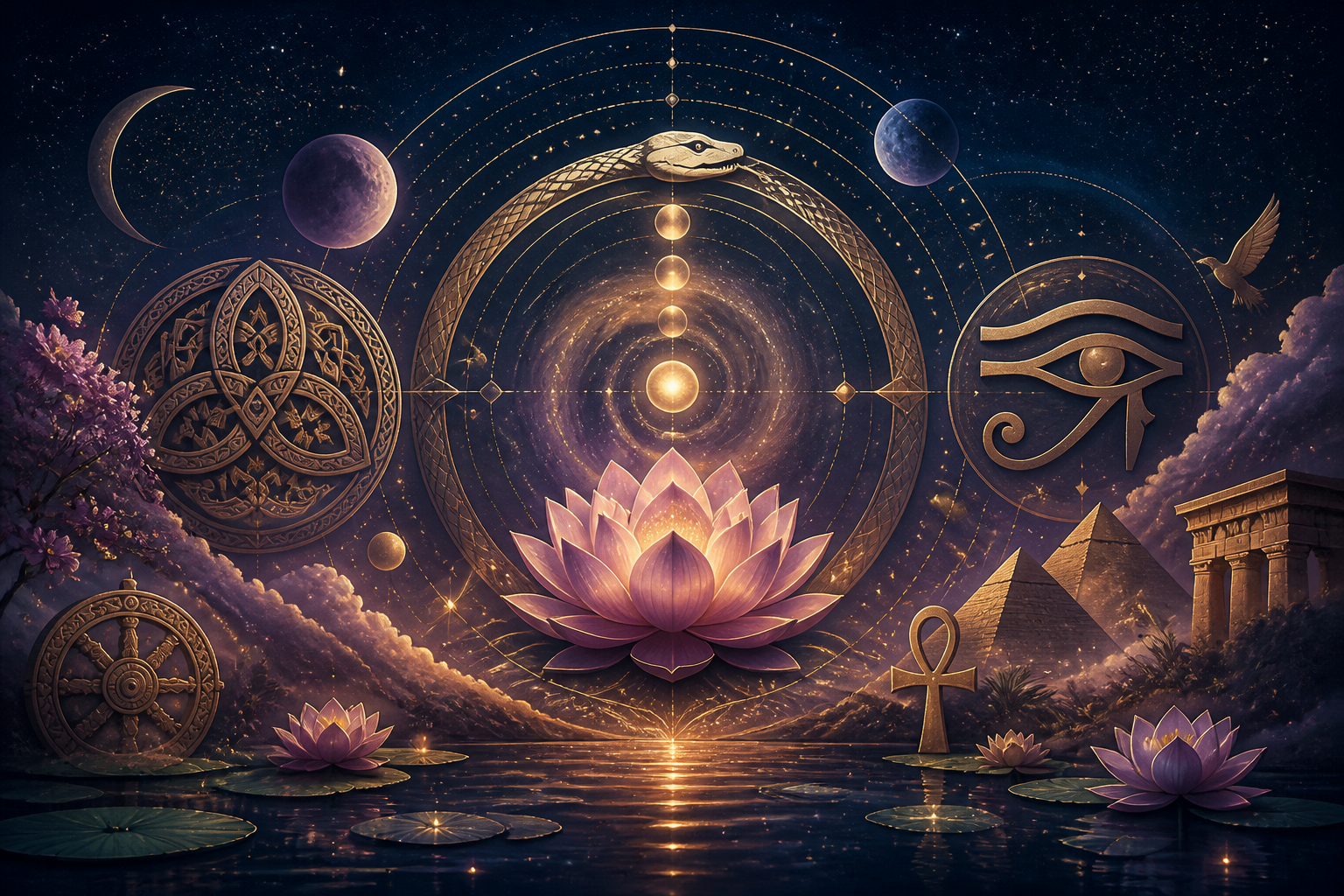
Explore the diverse beliefs in reincarnation across various cultures and spiritual traditions, examining their unique perspectives and interpretations.
Reincarnation is the philosophical or religious concept that the essence of a living being begins a new life in a different physical body after biological death. This idea transcends cultures and has been embraced by various spiritual traditions, each offering its unique interpretation of the cycle of life, death, and rebirth. Understanding these beliefs can enrich our appreciation of human spirituality and provide deeper insights into our own lives. In this article, we will compare reincarnation beliefs from around the world, exploring how different cultures perceive this timeless journey of the soul.
Hinduism: The Cycle of Samsara
In Hinduism, reincarnation is intertwined with the concept of **samsara**, which refers to the cycle of birth, death, and rebirth. Hindus believe that the soul (atman) is eternal and undergoes numerous lifetimes, influenced by karma—the accumulated actions from past lives. The goal is to achieve **moksha**, or liberation from samsara, which allows the soul to unite with Brahman, the ultimate reality.
For instance, a person's actions in one life determine their circumstances in future lives, creating a moral framework that encourages ethical behavior. This belief fosters a sense of responsibility and compassion toward all living beings, as every creature may be experiencing a part of their spiritual journey. The teachings of Hinduism also emphasize the importance of devotion (bhakti) and knowledge (jnana) as pathways to liberation, illustrating the multifaceted approach to understanding the soul's journey.
The concept of reincarnation in Hinduism also includes the idea of **varnas** (social classes) and **ashramas** (stages of life), which can influence the soul's journey. The belief in reincarnation encourages individuals to live a righteous life, as their actions will determine their future incarnations. This interconnectedness of life and the moral implications of one's actions create a profound sense of purpose and accountability. For more on this subject, explore Numerology for Beginners.
Buddhism: Impermanence and Enlightenment
Buddhism shares the concept of reincarnation but reshapes it significantly. Central to Buddhist philosophy is **anatta**, or the notion of non-self, which posits that there is no permanent, unchanging self that reincarnates. Instead, what continues is a stream of consciousness influenced by karma.
The ultimate goal in Buddhism is to attain Nirvana, a state of liberation and freedom from suffering. This is achieved through the **Four Noble Truths** and the **Eightfold Path**, which guide practitioners toward ethical living, mental discipline, and wisdom. For Buddhists, understanding the impermanence of life and the interconnectedness of all beings is crucial in breaking free from samsara. The practice of meditation and mindfulness plays a significant role in this journey, allowing individuals to cultivate awareness and compassion.
Take a 2-Minute Spiritual Break
Spiritual Memory Match
Find all six matching pairs of spiritual symbols. Flip two cards at a time.
Pairs: 0/6 · Moves: 0
Ready when you are. The game won't start until you choose Start Game.
For entertainment only. No scores or game data are sent to Awelax servers.
Quick Reflection Quiz
Explore what you would like to learn from “Reincarnation Beliefs Around the World.” This is a reflection activity, not a test or prediction.
1. What would you most like to take away from this article?
2. Which approach feels most useful to you right now?
3. What would you like to do next?
Frequently Asked Questions
What is the main topic of Reincarnation Beliefs Around the World?
Explore the diverse beliefs in reincarnation across various cultures and spiritual traditions, examining their unique perspectives and interpretations.
Where can I explore more about this topic?
Explore the related Awelax Journal articles below for more perspectives and information. Spiritual guidance is for personal insight and should not replace professional advice.
The Awelax Editorial Team creates educational content about psychic readings, intuition, relationships, tarot, and spiritual topics, with an emphasis on responsible guidance and clear expectations.
Awelax provides psychic and spiritual guidance for entertainment and personal insight. Readings are not a substitute for professional medical, legal, financial, or mental health advice.
Buddhism also emphasizes the importance of compassion (karuna) and loving-kindness (metta) towards all beings, recognizing that everyone is on their own journey of suffering and rebirth. This perspective encourages a deep sense of empathy and understanding, fostering a community of support among practitioners as they navigate their spiritual paths.
Ancient Egyptian Beliefs: The Journey of the Soul
In ancient Egypt, beliefs about the afterlife and reincarnation were deeply rooted in their cosmology. Egyptians believed that the soul underwent a journey after death, facing trials and judgment in the **Hall of Maat**, where the heart was weighed against a feather symbolizing truth and justice. For more on this subject, explore How to Read Your Birth Chart.
If deemed worthy, the soul could enter the afterlife and experience eternal life in the Field of Reeds. Some interpretations suggest a form of reincarnation, where the soul could return to the physical realm in different forms, depending on its moral standing. This belief emphasized the importance of leading a virtuous life, as one's actions directly influenced their fate in the afterlife. Additionally, the practice of mummification and the construction of elaborate tombs reflected the Egyptians' desire to preserve the body for the soul's journey, highlighting their deep reverence for life after death.
The Egyptians also believed in the concept of **Ka** and **Ba**, which represented different aspects of the soul. The **Ka** was the life force that remained with the body, while the **Ba** was the personality that could travel between the worlds of the living and the dead. This duality illustrates the complexity of their beliefs regarding the soul's journey and its potential for rebirth.
Indigenous Beliefs: Nature and Ancestral Spirits
Many indigenous cultures around the world embrace beliefs in reincarnation, often intertwined with their connection to nature and ancestral spirits. For example, some Native American tribes believe in the cyclical nature of life, where the spirits of the deceased may return in different forms, such as animals or plants.
This perspective fosters a profound respect for nature and emphasizes the interconnectedness of all living things. The teachings often highlight the importance of honoring ancestors and understanding one's place within the broader ecological and spiritual landscape. For these cultures, reincarnation is less about individual journeys and more about collective existence and continuity. Rituals, storytelling, and communal gatherings serve as vital practices to keep the memory of ancestors alive, reinforcing the belief that life continues in various forms. For more on this subject, explore How to Interpret Your Birth Chart for Personal Growth: A Step-by-Step Guide.
In many indigenous traditions, the concept of reincarnation is also linked to the cycles of nature, such as the changing seasons and the life cycles of plants and animals. This connection emphasizes the importance of living in harmony with the earth and recognizing the spiritual significance of all life forms.
Interactive Awelax Explorer
Personal Spiritual Journal
Write a private reflection. Entries are kept only in this page until you leave or refresh; use Copy to save them yourself.
For entertainment and personal reflection only; not a prediction, diagnosis, or professional advice. No responses are sent to Awelax servers by this activity.
Jainism: Liberation Through Right Knowledge
Jainism presents a nuanced perspective on reincarnation, emphasizing the importance of **ahimsa** (non-violence) and truthfulness in achieving liberation. Jains believe that the soul is trapped in a cycle of birth and rebirth due to karma, which is accumulated through actions that cause harm or falsehood.
To escape this cycle, Jains strive for spiritual purification through right knowledge, right faith, and right conduct. This path leads to **moksha**, where the soul is freed from the material world and achieves a state of perfection. This belief system promotes a high level of ethical consciousness and encourages practitioners to live in harmony with all living beings, recognizing the sanctity of life in every form. The rigorous practice of non-violence extends to all aspects of life, influencing dietary choices and daily interactions.
Jain teachings also emphasize the importance of self-discipline and ascetic practices, which are believed to help purify the soul and reduce karmic attachments. This commitment to spiritual growth and ethical living reflects the profound respect Jains have for all forms of life and their interconnectedness. For more on this subject, explore How Celebrity Birth Charts Are Interpreted.
Celtic Traditions: The Wheel of Life
In ancient Celtic traditions, reincarnation was often viewed through the lens of a cyclical understanding of time and existence, represented by the **Wheel of Life**. The Celts believed that life was a series of cycles, including birth, death, and rebirth, reflecting the changing seasons and natural rhythms of the earth.
This belief fostered a deep connection to the land and its cycles, with an emphasis on honoring the ancestors and the spirit world. Rituals and storytelling played a significant role in passing down these traditions, helping each generation understand their place within the eternal cycle of existence. The Celts also believed in the concept of the Otherworld, a realm where souls would go after death, further enriching their understanding of life beyond the physical.
The cyclical nature of existence in Celtic beliefs also underscores the importance of balance and harmony in life. The changing seasons symbolize the continuous flow of life, death, and rebirth, reminding individuals of the transient nature of existence and the need to honor both the seen and unseen aspects of life.
Modern Spirituality: A Fusion of Beliefs
In contemporary spiritual movements, reincarnation is often embraced as part of a broader, eclectic belief system. Many modern spiritualists draw from various traditions, including Eastern philosophies, indigenous wisdom, and New Age ideas. This fusion often emphasizes personal growth, soul evolution, and the idea that individuals choose their life circumstances to learn specific lessons. For more on this subject, explore The Power of Intention: How to Manifest Your Desires Through Focused Spiritual Practices.
For instance, some people believe that past life regression therapy can help individuals uncover previous incarnations, providing insights into current life challenges. This practice encourages self-reflection and personal development, allowing individuals to explore their spiritual journeys in a meaningful way. Additionally, modern spirituality often incorporates practices such as meditation, yoga, and energy healing, which are believed to facilitate a deeper connection to the self and the universe.
The modern interpretation of reincarnation often includes a focus on healing past traumas and understanding the lessons that the soul seeks to learn in each lifetime. This perspective encourages individuals to take an active role in their spiritual development, fostering a sense of empowerment and responsibility for their life choices.
Conclusion: The Universal Quest for Understanding
Reincarnation beliefs around the world reflect humanity's universal quest for understanding the mysteries of life, death, and beyond. While the interpretations may differ across cultures, the underlying themes of moral responsibility, spiritual evolution, and interconnectedness resonate deeply within each tradition. By exploring these diverse beliefs, we can cultivate a greater appreciation for our shared experiences and the varied paths we take on our spiritual journeys.
As you navigate your own spiritual path, consider seeking guidance from Awelax advisors, who can help illuminate your understanding of these profound concepts and their relevance in your life. Embracing the rich tapestry of reincarnation beliefs can inspire a deeper connection to yourself and the world around you. Ultimately, the exploration of these beliefs encourages us to reflect on our actions and their impact on our spiritual evolution, fostering a sense of unity and compassion in our shared human experience.