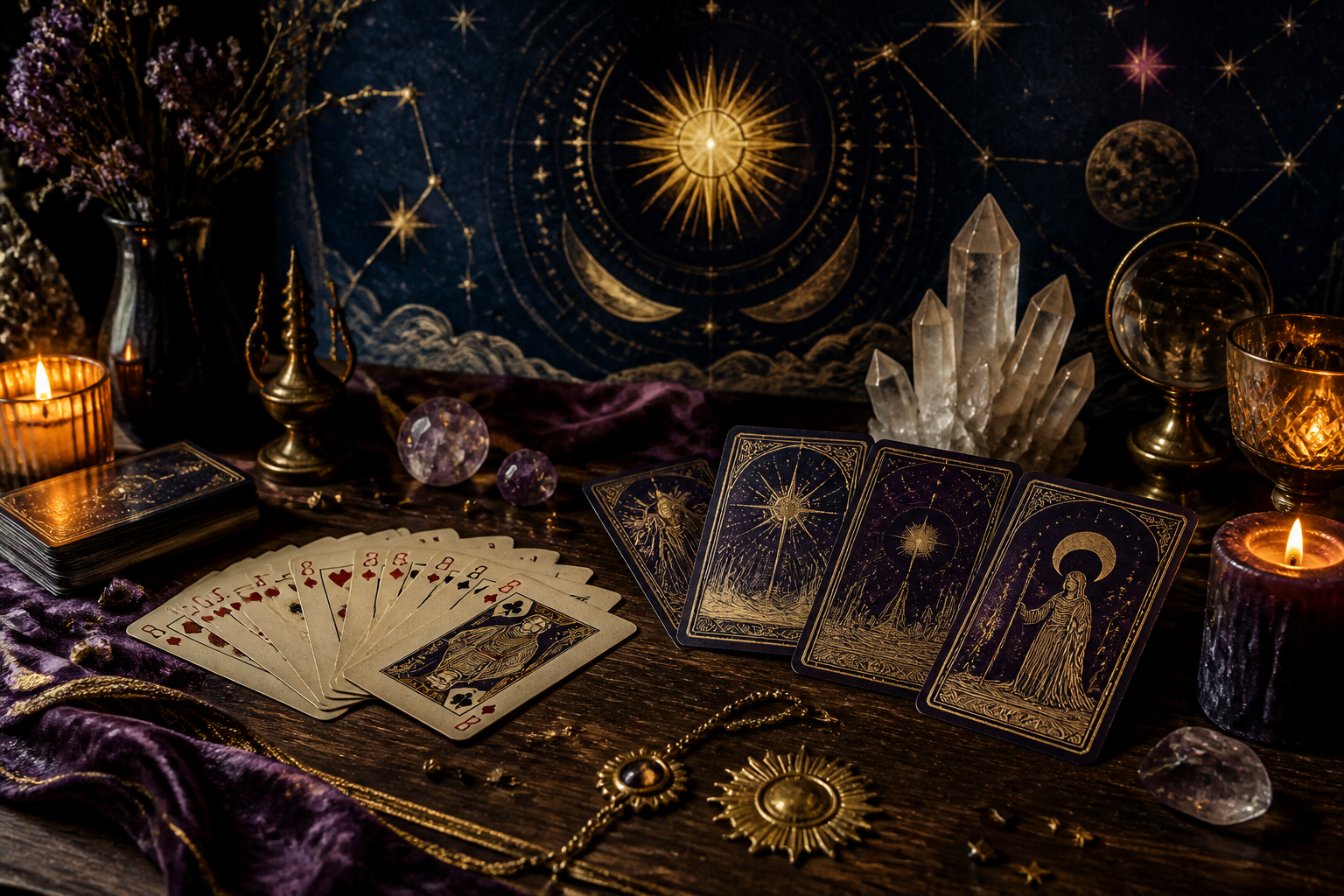
Explore the fascinating differences and similarities between cartomancy and tarot, two distinct yet closely related divination practices, and discover how each can be used for spiritual guidance.
Cartomancy and tarot are two popular forms of divination that have captivated people for centuries. While they share some similarities, they also have distinct characteristics that set them apart. In this article, we will explore the fundamental differences and similarities between cartomancy and tarot, delve into their unique histories, and offer practical guidance for those interested in these intriguing spiritual practices.
Understanding Cartomancy
Cartomancy refers to the practice of divination using a standard deck of playing cards. Cartomancers interpret the meaning of each card based on its suit, number, and position in a spread. The origins of cartomancy date back to the 14th century when playing cards were first introduced to Europe. The interpretations of card meanings can vary widely depending on cultural context and personal experience. For instance, the Ace of Hearts might symbolize love and new beginnings, while the Seven of Spades could represent conflict or loss.
One of the advantages of cartomancy is its accessibility; anyone can pick up a deck of playing cards and begin practicing. Many people enjoy the familiarity of using standard playing cards, making cartomancy a popular choice for beginners. The simplicity of the system allows for quick readings, which can be particularly appealing for those seeking immediate guidance.
The Rich Tradition of Tarot
Tarot, on the other hand, is a specialized form of divination that utilizes a unique 78-card deck, which includes both Major and Minor Arcana. The Major Arcana cards, such as The Fool and The Lovers, represent significant life events and spiritual lessons, while the Minor Arcana cards, divided into four suits (Cups, Pentacles, Swords, and Wands), focus on everyday experiences.
The tarot's origins can be traced back to the 15th century in Europe, where it was initially used as a card game before evolving into a tool for spiritual exploration and divination. The symbolism in tarot is rich and complex, drawing from various cultural, philosophical, and esoteric traditions, making it a deep well of insight for those who seek guidance. Each card in the tarot deck is designed with intricate imagery that conveys multiple layers of meaning, often requiring deeper contemplation and understanding. For more on this subject, explore Simple Cartomancy Spreads.
Key Differences between Cartomancy and Tarot
Take a 2-Minute Spiritual Break
Spiritual Memory Match
Find all six matching pairs of tarot symbols. Flip two cards at a time.
Pairs: 0/6 · Moves: 0
Ready when you are. The game won't start until you choose Start Game.
For entertainment only. No scores or game data are sent to Awelax servers.
Quick Reflection Quiz
Explore what you would like to learn from “Cartomancy Versus Tarot.” This is a reflection activity, not a test or prediction.
1. What would you most like to take away from this article?
2. Which approach feels most useful to you right now?
3. What would you like to do next?
Frequently Asked Questions
What is the main topic of Cartomancy Versus Tarot?
Explore the fascinating differences and similarities between cartomancy and tarot, two distinct yet closely related divination practices, and discover how each can be used for spiritual guidance.
Where can I explore more about this topic?
Explore the related Awelax Journal articles below for more perspectives and information. Spiritual guidance is for personal insight and should not replace professional advice.
The Awelax Editorial Team creates educational content about psychic readings, intuition, relationships, tarot, and spiritual topics, with an emphasis on responsible guidance and clear expectations.
Awelax provides psychic and spiritual guidance for entertainment and personal insight. Readings are not a substitute for professional medical, legal, financial, or mental health advice.
One of the primary distinctions between cartomancy and tarot lies in the cards themselves. While cartomancy utilizes a standard 52-card deck plus Jokers, tarot cards are specially designed with unique imagery and symbolism. Each tarot card has its own meaning, which often encompasses multiple layers of interpretation.
Additionally, the structure of the two systems varies. Cartomancy typically follows a more straightforward approach, often focusing on the direct meaning of the cards drawn. In contrast, tarot readings can involve more intricate spreads and combinations of cards, allowing for deeper insights into complex situations.
Furthermore, the spiritual and philosophical frameworks surrounding these practices differ. Tarot often incorporates elements of astrology, numerology, and Kabbalah, whereas cartomancy tends to rely more on intuitive interpretations of the playing cards. This difference can influence the depth and breadth of insights that practitioners derive from each method.
Try an interactive tool
Interactive Tarot Reflection
Draw a reflective tarot card for a new perspective.
For entertainment and personal reflection only. Not a prediction or substitute for professional advice. Your answers stay in this browser session.
Reading Techniques: Cartomancy
When it comes to reading cartomancy, the process is relatively simple and can be tailored to the individual reader's style. Common techniques include single-card draws for quick insights or more elaborate spreads, such as the three-card spread, which can represent the past, present, and future.
To practice cartomancy, one must first familiarize themselves with the meanings of the cards. Many cartomancers create personal interpretations based on their experiences, intuition, and the specific situation at hand. For instance, if a card associated with conflict appears, the reader may reflect on how it resonates with the querent's current life. For more on this subject, explore Playing Card Suits in Cartomancy.
Moreover, because the meanings can vary, it’s often helpful to keep a journal of readings to track interpretations and insights over time. This practice can enhance one's intuitive abilities and deepen the understanding of the cards. Additionally, engaging in regular practice can help readers refine their skills and develop a more nuanced approach to interpretation.
Interactive Awelax Explorer
Three-Card Tarot Reading
Draw three symbolic cards for Past, Present, and Future reflection.
For entertainment and personal reflection only; not a prediction, diagnosis, or professional advice. No responses are sent to Awelax servers by this activity.
Reading Techniques: Tarot
In contrast, tarot readings often involve more structured approaches due to the complexity of the card meanings and the variety of spreads available. A popular method is the Celtic Cross, which offers a comprehensive view of a situation by examining various aspects such as obstacles, hopes, and outcomes.
Tarot readers often emphasize the importance of connecting with the cards on a personal level. Before a reading, many practitioners engage in rituals, such as shuffling the deck while focusing on a specific question or intention. This connection fosters a deeper relationship with the cards, enhancing the reader's intuition and ability to interpret the spread effectively.
Interactive Awelax Explorer
Personal Spiritual Journal
Write a private reflection. Entries are kept only in this page until you leave or refresh; use Copy to save them yourself.
For entertainment and personal reflection only; not a prediction, diagnosis, or professional advice. No responses are sent to Awelax servers by this activity.
Additionally, tarot cards can be interpreted in reverse, offering even more nuanced readings. The reversed meanings can signify blocks, challenges, or altered energies related to the card's upright position, adding another layer of depth to the reading. This complexity allows for a richer exploration of the querent's situation and can lead to profound insights during the reading process.
Explore further
Pick a Card
Choose a card for a thoughtful reflection. This is a symbolic activity, not a prediction.
For entertainment and personal reflection. No account required; selections are not submitted to a server.
Symbolism in Cartomancy and Tarot
The symbolism within cartomancy is generally less complex than that found in tarot. Each suit of a playing card deck has its own traditional meanings. For example, Hearts often symbolize emotions and relationships, while Clubs represent work and challenges. However, these meanings can vary based on cultural context and individual interpretation. For more on this subject, explore Cartomancy for Beginners.
In tarot, the symbolism is often rich and layered, with each card telling a story that draws on mythology, psychology, and spiritual wisdom. For example, The High Priestess card represents intuition, mystery, and the subconscious, often inviting the querent to look within themselves for answers. The imagery in tarot cards can evoke powerful emotions and insights, making them a valuable tool for deeper spiritual exploration. The intricate artwork and symbolism can serve as a meditation point for the reader, guiding them to uncover hidden truths and greater understanding.
Choosing Between Cartomancy and Tarot
Deciding whether to pursue cartomancy or tarot depends largely on your personal preferences and goals. If you are looking for a straightforward, accessible practice, cartomancy might be the right choice for you. It requires minimal investment in materials and can be easily practiced anywhere.
However, if you are drawn to rich symbolism and a structured approach to spiritual exploration, tarot may offer a more satisfying experience. The unique deck and elaborate spreads can provide profound insights into complex life situations.
Ultimately, both practices can be beneficial tools for self-reflection and spiritual guidance. Many practitioners find value in exploring both forms of divination, allowing them to draw from the strengths of each tradition. By experimenting with both cartomancy and tarot, you can discover which resonates more deeply with your intuition and spiritual journey.
Conclusion
In summary, cartomancy and tarot are two distinct yet related forms of divination that offer unique insights and spiritual guidance. While cartomancy utilizes a standard deck of playing cards and focuses on straightforward interpretations, tarot provides a rich, symbolic experience through a specialized 78-card deck.
By understanding the differences and similarities between these practices, you can make an informed choice about which path resonates with you. Whether you choose to explore the familiar territory of cartomancy or dive into the depths of tarot, both offer valuable opportunities for personal growth and spiritual exploration. If you're interested in furthering your journey, consider seeking guidance from Awelax advisors who specialize in these traditions, helping you unlock the wisdom within yourself. Embrace the journey of self-discovery and allow these tools to illuminate your path.