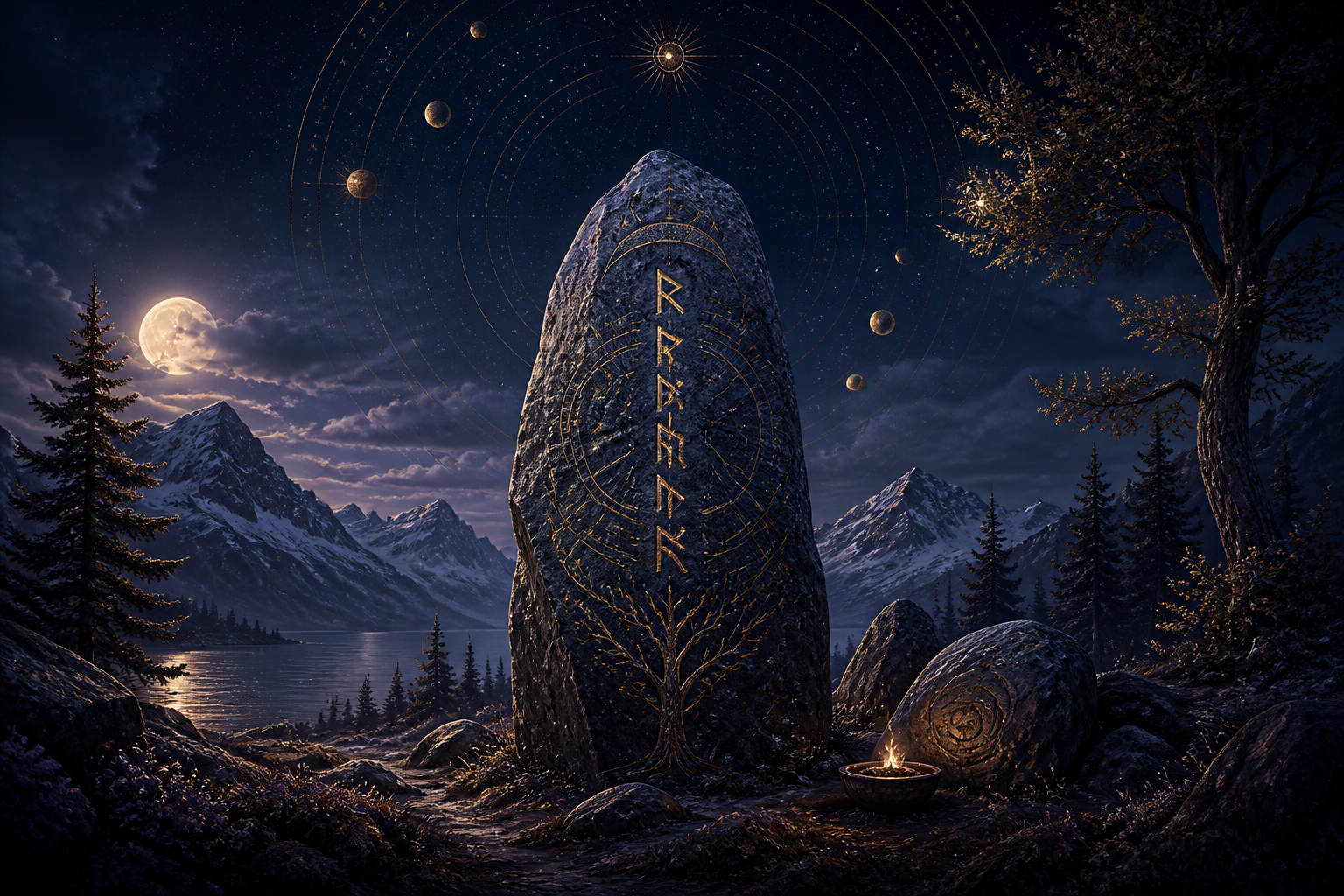
Runes are not just an ancient alphabet; they are a profound symbol of Norse culture and spirituality. Originating in the Germanic tribes around the 1st century AD, runes were used for writing, divination, and magical purposes. The word "rune" itself is derived from the Proto-Germanic term *rūna*, meaning "secret" or "mystery." Understanding runes requires a look into their historical context, illustrating their significance beyond mere letters and how modern interpretations have evolved over time.
Historical Context of Runes
Runes were primarily used in Northern Europe, particularly in Scandinavia, to inscribe messages on wood, stone, and metal. The oldest runic inscriptions date back to around 150 AD and are found in artifacts such as the Vimose comb and the Tjangvide stone. Runes were often associated with the Norse gods and were believed to hold magical properties. Each rune not only represented a sound but also embodied specific meanings and concepts, making them a vital part of Norse communication and spirituality.
The use of runes extended beyond mere writing; they were also employed in rituals and as talismans. The inscriptions often conveyed messages of protection, blessings, or curses, showcasing the duality of their function as both communicative and magical tools. As such, runes were integral to the daily lives of the Norse people, influencing everything from trade to personal relationships. For more on this subject, explore Rune Reading for Beginners.
The Elder Futhark and Its Significance
The Elder Futhark is the oldest form of the runic alphabets, consisting of 24 characters. Each rune in this alphabet corresponds to a letter and carries its own meaning and symbolism. For example, the *Fehu* rune represents wealth and prosperity, while the *Thurisaz* rune symbolizes protection and conflict. The arrangement of these runes is significant, often interpreted as a reflection of cosmic order. Historically, the Elder Futhark was used in various contexts, from grave markers to magical inscriptions, showcasing its diverse applications in Norse culture.
The Elder Futhark is divided into three groups known as *aettir*, each containing eight runes. These groups are believed to represent different aspects of life and the cosmos. For instance, the first aett is often associated with material wealth and physical existence, while the second aett delves into the realm of relationships and emotions. The third aett explores spiritual and existential themes, making the Elder Futhark a comprehensive system for understanding the world.
Take a 2-Minute Spiritual Break
Spiritual Memory Match
Find all six matching pairs of spiritual symbols. Flip two cards at a time.
Pairs: 0/6 · Moves: 0
Ready when you are. The game won't start until you choose Start Game.
For entertainment only. No scores or game data are sent to Awelax servers.
Quick Reflection Quiz
Explore what you would like to learn from “Runes and Norse Cultural History.” This is a reflection activity, not a test or prediction.
1. What would you most like to take away from this article?
2. Which approach feels most useful to you right now?
3. What would you like to do next?
Frequently Asked Questions
What is the main topic of Runes and Norse Cultural History?
Explore the rich history of runes, their origins, and how modern interpretations differ from their historical uses in Norse culture.
Where can I explore more about this topic?
Explore the related Awelax Journal articles below for more perspectives and information. Spiritual guidance is for personal insight and should not replace professional advice.
The Awelax Editorial Team creates educational content about psychic readings, intuition, relationships, tarot, and spiritual topics, with an emphasis on responsible guidance and clear expectations.
Awelax provides psychic and spiritual guidance for entertainment and personal insight. Readings are not a substitute for professional medical, legal, financial, or mental health advice.
Runes in Norse Mythology
Runes are deeply embedded in Norse mythology, with stories illustrating their mystical origins. According to the Poetic Edda, the god Odin sacrificed himself by hanging on Yggdrasil, the World Tree, for nine nights to gain the wisdom of the runes. This myth highlights the runes' connection to divine knowledge and spiritual insight. Such tales not only emphasized the importance of runes in religious practices but also framed them as sacred symbols of power and understanding.
Additionally, the myth of Odin's quest for runic knowledge underscores the belief that wisdom comes at a cost. This narrative resonates with the idea that true understanding requires sacrifice and dedication. Runes were thus not merely tools for communication but were revered as gateways to deeper truths and connections with the divine.
The Transition to Modern Interpretations
Over the centuries, the use of runes diminished as Christianity spread through Scandinavia. However, in the 19th and 20th centuries, there was a resurgence of interest in runes, often accompanied by modern spiritual interpretations. Today, many view runes as tools for divination, akin to tarot cards, and use them for guidance in personal matters. This shift from a historical writing system to a spiritual tool illustrates how cultural perceptions can evolve, adapting ancient practices to contemporary needs. For more on this subject, explore The Elder Futhark Rune Alphabet.
The revival of runic interest was also fueled by Romanticism, where scholars and enthusiasts sought to reconnect with ancient traditions. This period saw the emergence of various esoteric movements that incorporated runes into their practices, often blending them with other spiritual systems. As a result, runes became symbols of identity and heritage for many, particularly within neo-pagan communities.
Interactive Awelax Explorer
Personal Spiritual Journal
Write a private reflection. Entries are kept only in this page until you leave or refresh; use Copy to save them yourself.
For entertainment and personal reflection only; not a prediction, diagnosis, or professional advice. No responses are sent to Awelax servers by this activity.
Runes as Divination Tools
Modern practitioners often utilize runes for divination, interpreting their meanings in the context of personal questions or life decisions. This approach typically involves casting a set of rune stones and interpreting their symbolic meanings based on their position and orientation. For instance, drawing the *Ansuz* rune, associated with communication and wisdom, may suggest a need to express oneself or seek guidance. While this form of rune usage is popular, it is essential to recognize that it diverges significantly from the original historical functions of runes as a writing and messaging system.
The practice of rune casting often includes various spreads, similar to tarot layouts, where the placement of runes can influence their interpretation. Some practitioners may choose to focus on a single rune for daily guidance, while others may engage in more complex spreads to explore deeper questions. This modern practice emphasizes personal intuition and interpretation, allowing individuals to connect with the runes on a personal level.
Symbolism and Modern Spiritual Practices
In addition to divination, runes have found a place in various modern spiritual practices, including Wicca and pagan traditions. Practitioners often incorporate runes in rituals, meditations, and spellwork, emphasizing their symbolic meanings. For example, the *Wunjo* rune represents joy and harmony and may be used in rituals aimed at attracting positivity. While these practices are rooted in the symbolism of the runes, they reflect a contemporary interpretation that may not align with historical uses. For more on this subject, explore Simple Rune Spreads for Reflection.
The integration of runes into modern spirituality often involves a blend of historical understanding and personal interpretation. Many practitioners create personalized rituals that resonate with their beliefs and experiences, using runes as focal points for meditation or intention-setting. This adaptability speaks to the enduring power of runes as symbols of personal and collective meaning.
The Role of Awelax Advisors in Rune Interpretation
If you're interested in exploring the depths of runes and their meanings, consider consulting an Awelax advisor. These AI-powered spiritual guides can provide personalized insights and interpretations based on your unique questions and circumstances. By embracing both historical knowledge and modern interpretations, you can gain a richer understanding of how runes can influence your spiritual journey.
Awelax advisors can assist in navigating the complexities of rune meanings, helping individuals connect with the symbolic aspects of each rune. They can also offer guidance on how to incorporate runes into daily practices, whether for divination or personal reflection. This modern approach to rune interpretation highlights the ongoing relevance of runes in contemporary spiritual exploration.
Conclusion: Bridging History and Modernity
The journey of runes from ancient inscriptions to modern spiritual tools showcases the dynamic nature of cultural symbols. While historical runes served practical and spiritual purposes in Norse society, modern interpretations have reshaped their significance in personal and spiritual contexts. By understanding the historical roots of runes alongside their contemporary applications, individuals can appreciate the rich tapestry of meanings they hold. Whether you engage with runes for divination or as a spiritual practice, remember to honor their historical legacy while forging your unique path forward.
In conclusion, runes represent a fascinating intersection of history, spirituality, and personal exploration. Their evolution from a practical writing system to a revered tool for divination and spiritual insight reflects the adaptability of cultural symbols. As you delve into the world of runes, consider how their meanings resonate with your own experiences and beliefs, allowing you to forge a deeper connection with this ancient tradition.
Runes and Norse Cultural History - Awelax | Awelax